A tattoo can hide a story no one else knows. The poison tree tattoo is one of those designs — quiet on the surface, loud underneath. This guide breaks down its real meaning, its roots in poetry, and what it says about the person wearing it.
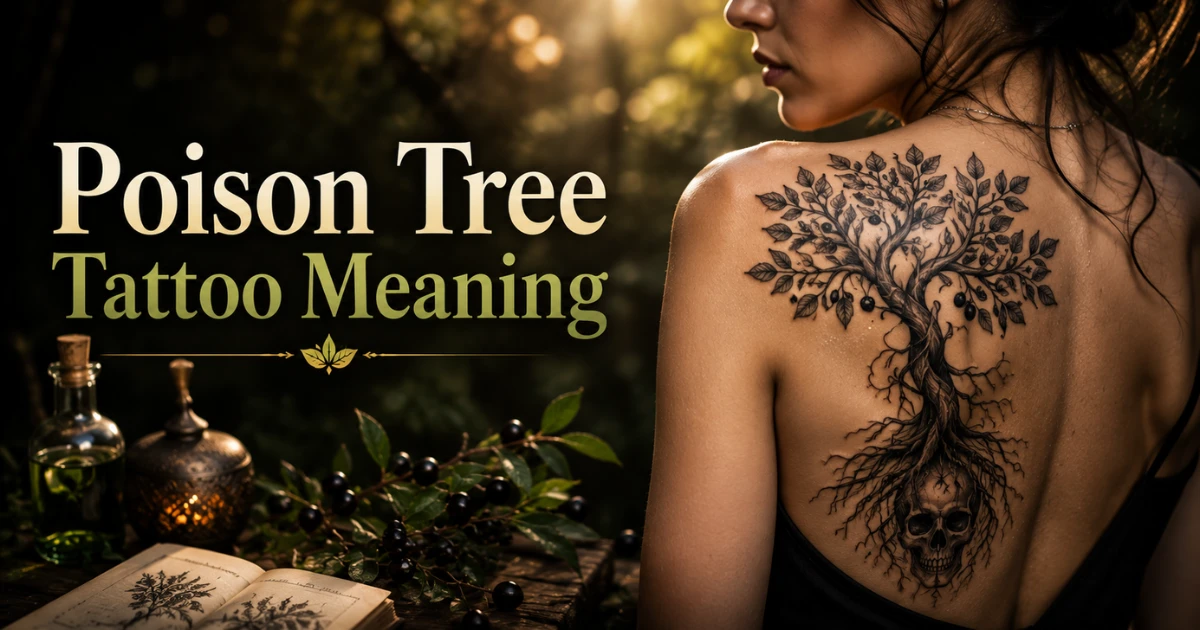
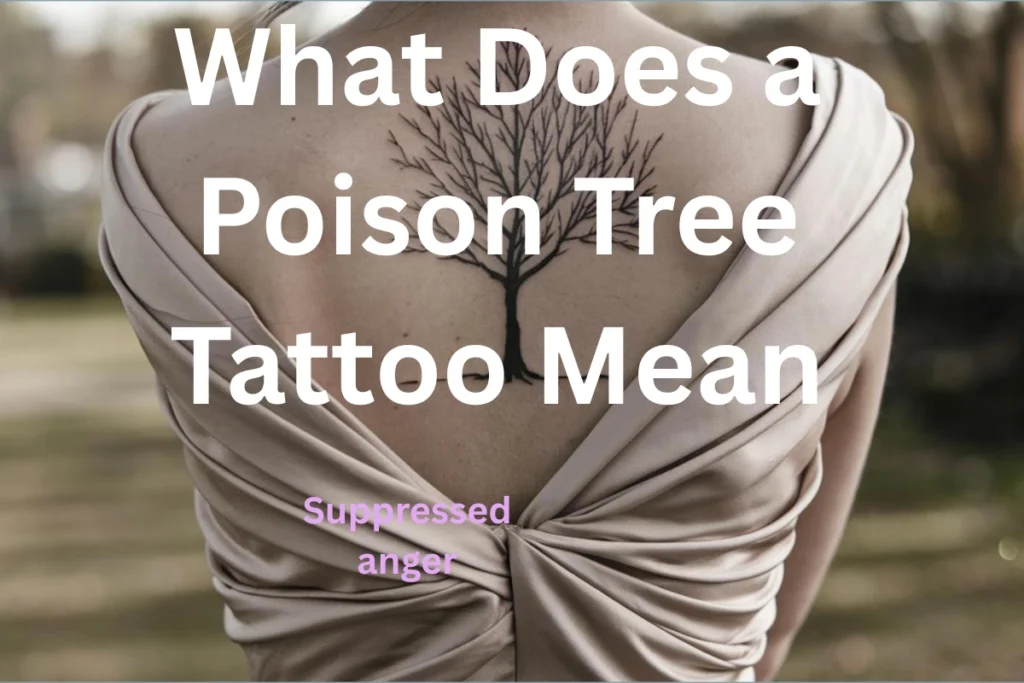
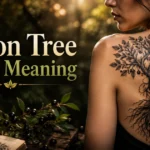
A poison tree tattoo meaning centers on one simple idea: buried anger doesn’t vanish, it grows. The design usually shows a twisted trunk, bare branches, and sometimes a single glowing apple.
People choose this tattoo when words weren’t enough. It marks a feeling they carried silently for a long time.
Suppressed anger
Emotional survival
A private turning point
Poison Tree Tattoo Meaning: Origin Story
This symbol comes straight from William Blake’s poem “A Poison Tree,” written in 1794. The poem is short, but its message hits hard even today.
In it, the speaker hides anger from an enemy instead of talking it out. That silence feeds a tree, the tree grows an apple, and the apple brings harm. It’s a warning wrapped in four small verses.
Poison Tree Symbolism Explained
poison-tree-symbolism-explained
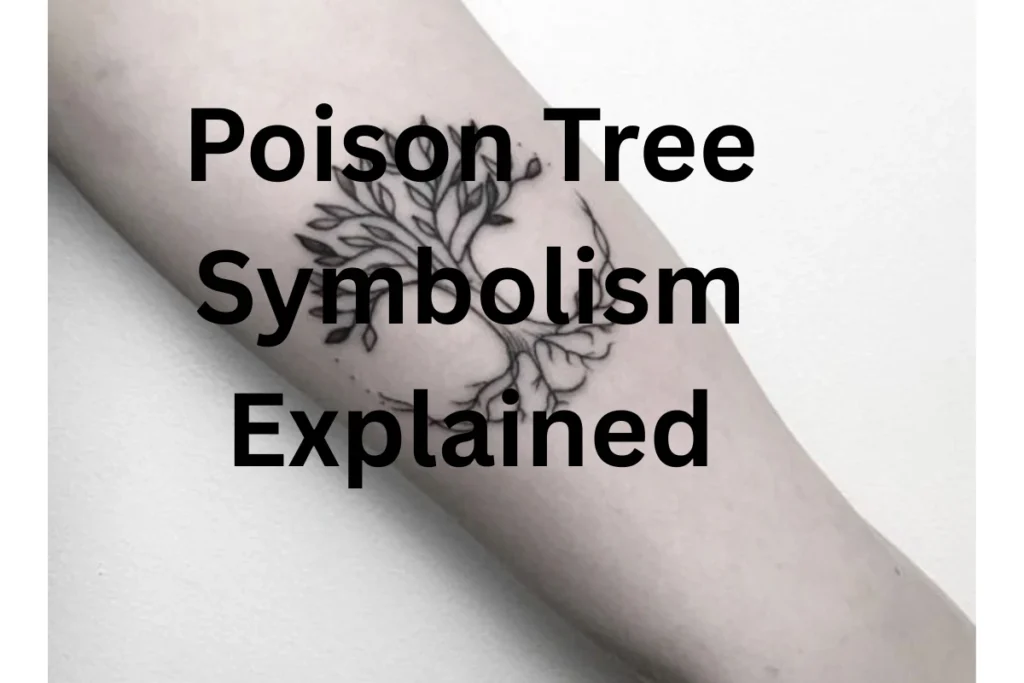
Poison tree symbolism isn’t one-note. Different parts of the design carry different weight, and most wearers pick elements on purpose.
Roots — hidden pain buried under the surface
Branches — actions that grow out of bottled-up feelings
The apple — the moment silence turns into consequence
Bare bark — years spent guarding a wound
Thorns — protection built from past hurt
Twisted trunk — a life reshaped by hardship
Poison Tree Spiritual Meaning
The poison tree spiritual meaning goes past anger. Many wearers connect it to cause and effect — what you nurture inside eventually shows up outside.
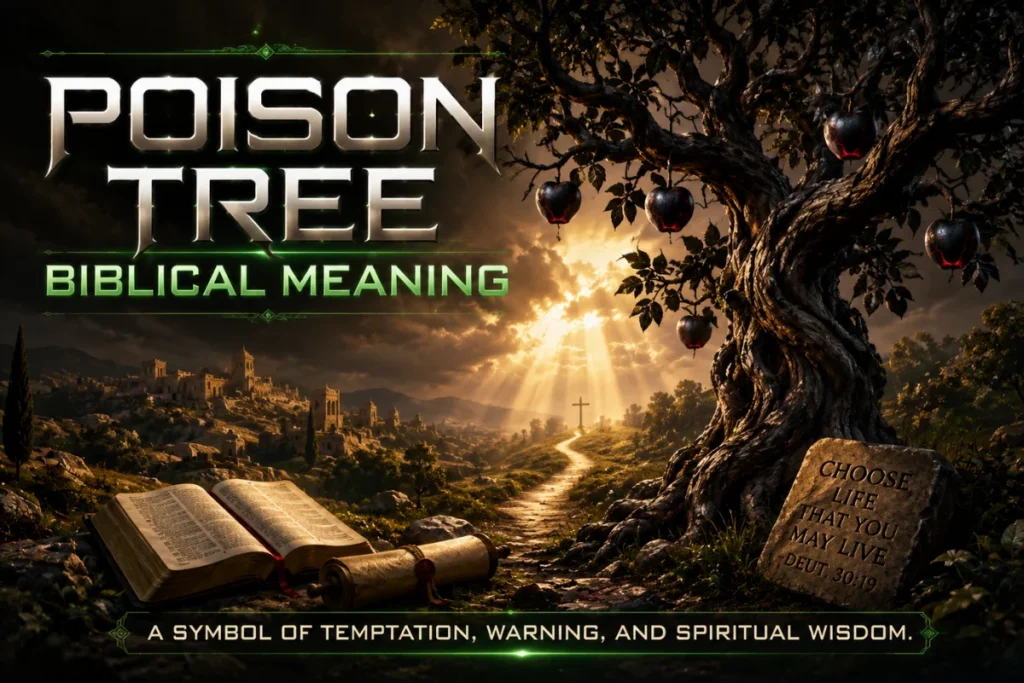
Is a poison tree tattoo biblical? It can be, though not every wearer means it that way. The poisoned apple echoes the forbidden fruit from Genesis.
Temptation and choice
Consequence for hidden sin
Knowledge gained through hardship
A moral test, not just a design
The cost of giving in to anger
A personal reminder about restraint
Poison Tree Meaning in Dreams
Seeing a poisoned or dying tree in a dream often points inward, not outward. Dream interpretation isn’t exact science, but common threads repeat across cultures.
Unresolved anger you haven’t faced
A warning about a toxic situation
Guilt sitting under the surface
Fear of a relationship turning sour
A need to speak up before it’s too late
Emotional exhaustion building quietly
A signal that something needs closure
Poison Tree Meaning If It Appears at Home
In folklore and superstition, a poison or dying tree near a home carries its own weight. This isn’t about the tattoo directly, but it shapes how people read the symbol.
A warning about hidden household tension
Bad energy that needs clearing
Neglected emotional issues within a family
A sign to address conflict directly
Unspoken resentment among people close to you
A call to restore balance at home
Poison Tree Tattoo Meaning for Women
For many women, this design speaks to resilience more than revenge. It’s less about staying angry and more about proving they made it through.
Emotional survival after heartbreak
Independence reclaimed
Healing shown as art, not weakness
A boundary marked in ink
Strength that isn’t loud
Poison Tree Tattoo Meaning for Men
Men often frame this tattoo around control, not concealment. It becomes a personal reminder to speak up instead of bottling things down.
A pledge to confront anger directly
Emotional discipline
Strength carried quietly
A mark of a hard chapter survived
Poison Tree vs Tree of Life Tattoo
Feature
Poison Tree
Tree of Life
Core meaning
Suppressed anger, consequence
Growth, family, connection
Tone
Dark, cautionary
Hopeful, expansive
Best fit
Marking a specific wound
Celebrating growth or heritage
Popular Poison Tree Tattoo Designs
Style changes the whole feel of the piece. Here’s what tends to show up most in tattoo studios.
Blackwork — bold, heavy shading, ages well
Fine line minimalist — subtle, small placements
Realistic — detailed bark and roots, larger canvas
Illustrative Blake-style — etching look, sometimes with a line of poetry
Best Placement for Poison Tree Tattoo
Where you place it changes how personal or public the meaning feels.
Forearm — visible, a daily reminder
Chest — private, tied close to emotion
Back — a story you carry but don’t show
Ribs — quiet, meant only for you
Poison Tree Tattoo Color Meanings
Color shifts the tone of the whole piece, sometimes more than the design itself.
Black — mystery, suppressed emotion
Red — anger, danger, unresolved feeling
Green — growth breaking through pain
Purple — inner conflict, spiritual tension
Poison Tree Tattoo Aftercare Tips
Good healing keeps fine detail sharp for years, especially in shaded designs.
Wash gently, avoid picking at scabs
Moisturize daily once peeling starts
Use sunscreen once healed to protect ink
Skip hot tubs and pools during early healing
FAQ’s
What does the poison tree symbolize?
It symbolizes suppressed anger and the emotional damage that grows when feelings stay unspoken.
What is the meaning of A Poison Tree?
William Blake’s poem shows how hidden anger grows into something destructive, while expressed anger simply fades.
Why does Beyoncé have three dots on her finger?
Public reports link the three dots to a personal tribute, though she has not given an official explanation herself.
What does A Poison Tree tattoo mean on a woman?
It often represents resilience, healing, and strength after a painful or toxic experience.
Is the poison tree a bad thing?
Not always, since many wearers use it to mark healing and growth rather than ongoing negativity.
Is the poison tree biblical?
It can connect to biblical themes like forbidden fruit and consequence, though not every design is meant that way.
Samuel Hayes is a meaning researcher and content writer specializing in colors, flowers, tattoos, dreams, symbols, and names, delivering accurate, easy-to-understand, and well-researched explanations.